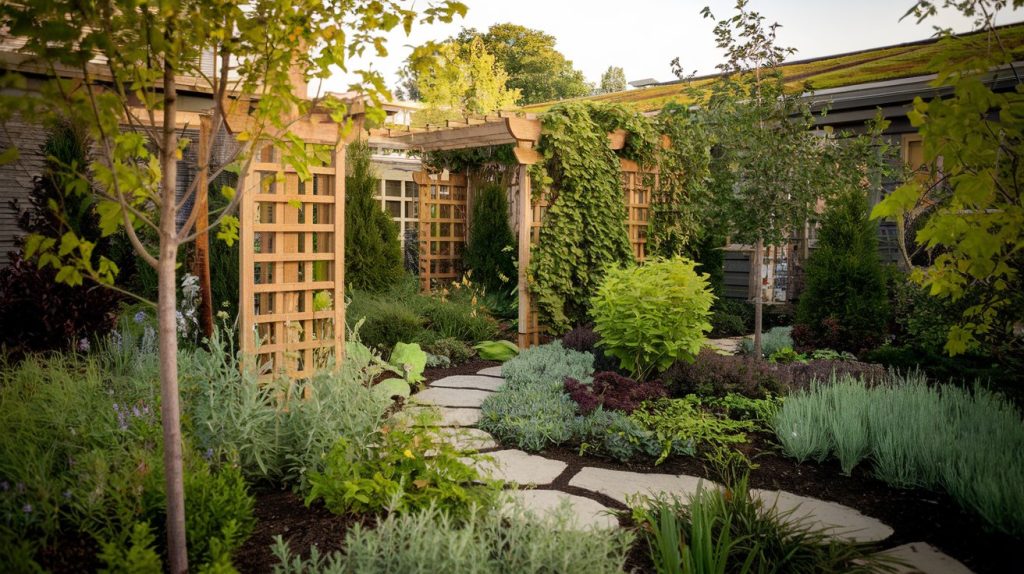
Introduction to the Importance of Sustainable Design in Home Gardens
In our rapid world, which focuses on environmental conservation and sustainability, sustainable design in home gardens has an important role in striking a balance between natural beauty and the sustainability of resources. Besides, investing in green garden design involves not just an aesthetic decision but also a step toward going environmentally friendly and resource-efficiently into the future.
Benefits of Sustainable Design in Home Gardens Design
Water and Energy Conservation
It cuts down on water consumption through the reliance on smart irrigation systems that are embedded with drip irrigation or rainwater collection for reusing. It can also cut down on the use of electricity since pumps and lighting can be powered by solar energy.
Improved Air Quality and Reduced Pollution
Green gardens with native plants would help clean the air of pollutants and improve air quality around the house. Plants act like natural filters by absorbing the carbon dioxide and releasing oxygen to provide a healthy environment for your family.
Supporting Biodiversity
Sustainable Design in Home Gardens supports the growth of local flora to allow for the cultivation of native plants that support native bird life and helpful insects. When conditions for such organisms are provided, it enhances biodiversity, hence helping in maintaining the health of the local ecosystem.
Sustainable Finance
Although it could call for more significant investment initially, it pays off over time through reduced maintenance. Compared to other garden types, a sustainably designed garden utilizes fewer resources like water and energy; hence, it saves money over time.
Waste Reduction and Increase in Recycling
Compost Organic compost derived from plant waste may enhance soil health, thereby reducing the need for chemical fertilizers. Making garden construction from recyclable materials furthers the aim of waste reduction.
Creating a Serene and Visually Appealing Environment
With the right plant choices and spacing design that incorporates nature with the architectural design of the home, a sustainable garden can act as a quiet place for relaxation or even an escape from daily stressors. The gardens provide natural beauty to the home to add to aesthetic appeal and further enhance real estate value.
How to Design a Sustainable Home Garden
Select Native Plants
Native plants also show better resistance to local weather conditions, which require less water consumption, reducing chemical usage for pest control. Adaptation to the local environment plants makes them more sustainable and budget-friendly.
Use Eco-Friendly Materials
Whenever designing pathways or fences, it is always better to create them out of recyclable materials like sustainable wood or local stone. These materials besides being friendly to the environment, they would also give a more natural look to the garden.
Utilize Modern Irrigation Methods
Drip irrigation and rainwater gathering systems are two great ways to save water. These types of irrigation deliver water straight to the roots of the plants, hence assuring minimal wastage and healthier plants.
Include Renewable Energy in Design
Applying solar panels in gardens as an energy source is a good alternative to enhance the principle of sustainability. They will supply energy either to the lighting in outdoors or to power irrigation pumps without depending on other conventional energy sources.
Improve Soil Naturally
Organic fertilizers and compost obtained from garden waste improve the fertility of the soil without the usage of chemical fertilizers, which have really caused detriment to the environment. This approach improves plant quality and productivity.
Design for Sustainability: Investing in the Future Green garden design is the investment in the future of our priceless planet and in the health of further generations. The sustainable garden is much more than a nice place to rest during one’s free time; it is an opportunity to take part in preserving natural resources and thus enhancing the quality of life.
By embracing sustainable practices in designing our home gardens, the economic and environmental gains go hand in hand; therefore, this approach is ideal for those whose aim is to get long-term, sustainable solutions.
Frequently Asked Questions
1- What is sustainable design in home gardens?
Sustainable design in home gardens basically refers to the use of strategies and techniques to create ecologically friendly gardens dependent on natural resources in ways that lead to minimal consumption of water and energy and are supportive of biodiversity.
2- What plants will be suitable for sustainable design?
Native or drought-resistant plants fit best in this type of design because they already know how to live with the natural environment of the space surrounding them and don’t need as much water or fertilizers.
3- How will I reduce water consumption in my garden?
You can reduce water consumption by using drip irrigation systems, harvesting rainwater, planting species that require less water. Mulching the soil reduces evaporation, too.
4- Does sustainable design in home gardens require higher costs?
With sustainable design, consumption of water and maintenance costs are ultimately lower, although the initial costs might be a little higher; hence, it’s a very good long-term investment.
5- How does your sustainable design in home gardens support biodiversity?
It supports biodiversity through the growing of native plants that provide food and habitats for wildlife, such as birds and insects that are beneficial and help with the balance of the ecosystem.
6- Can I use solar energy in my sustainable garden?
They can also be used for garden lighting or the power of irrigation pumps to reduce consumption of electricity and add sustainability.
7- How do I make my existing garden a sustainable design in home gardens one?
You can start assessing water and energy use, then apply adequate irrigation techniques that save water, plant native species, and recycle materials for the betterment of soil and infrastructure.
8- What materials are to be used in a sustainable design in home gardens?
Natural or recyclable materials, like sustainable wood, natural stone, and organic compost, can improve the soil.
9- What is the purpose of organic compost in a sustainable design in home gardens?
Organic compost enriches the soil with natural nutrients instead of using too much chemical fertilizer for the plants; thus, the plants are much healthier and the garden more sustainable.
10- How would it impact environmental health?
It minimizes resource consumption by reducing environmental pollution and supports the health of local ecosystems with biodiversity, while renewable energy resources are also used.
For inquiries or assistance, feel free to reach out to us:
📞 +971-527592533
📞 +971-555929802
You can also contact us directly on WhatsApp by clicking the link below:
🔗 WhatsApp Us
We’re here to help!